
Indian Hills Insight: Dental
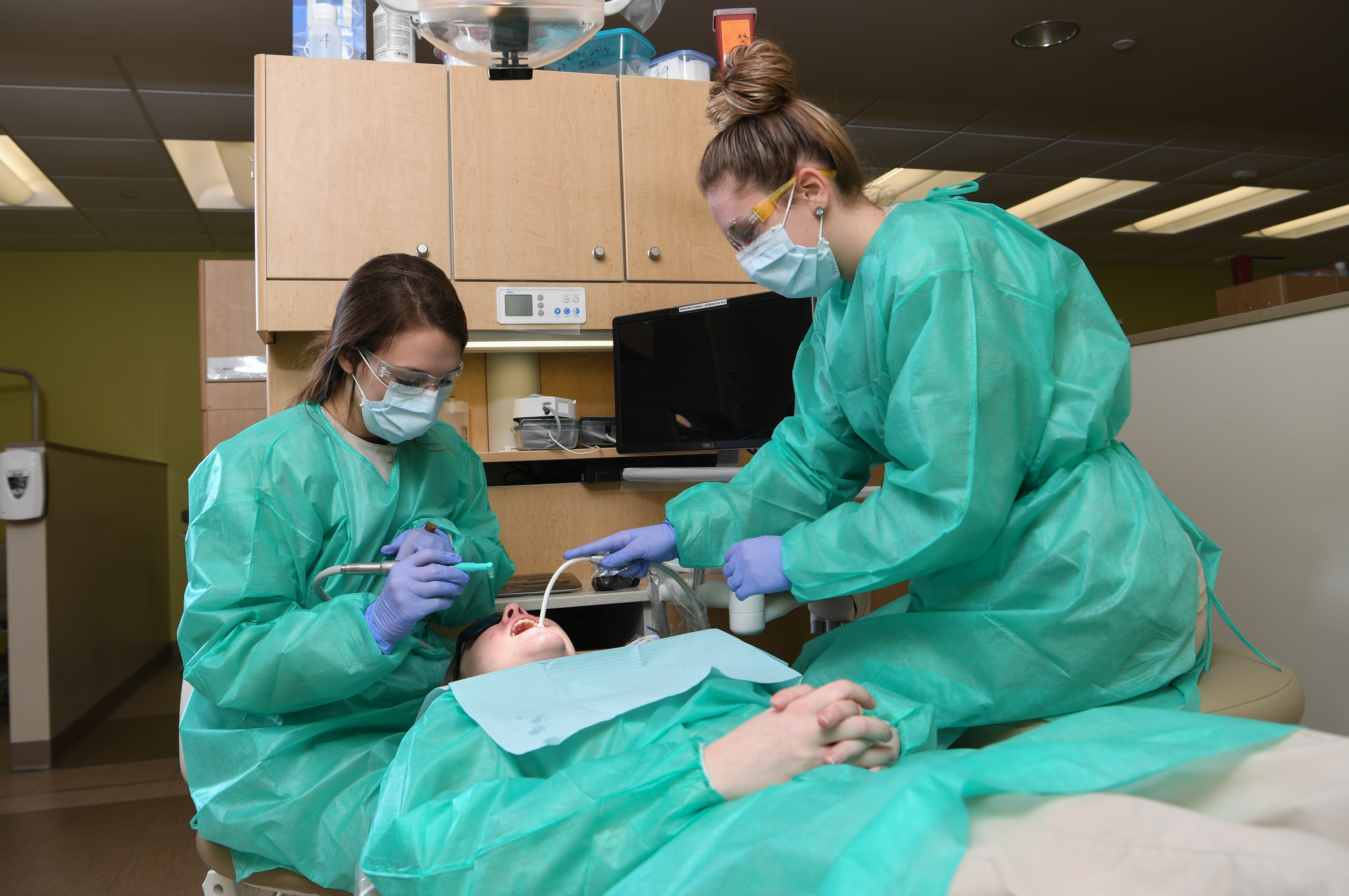
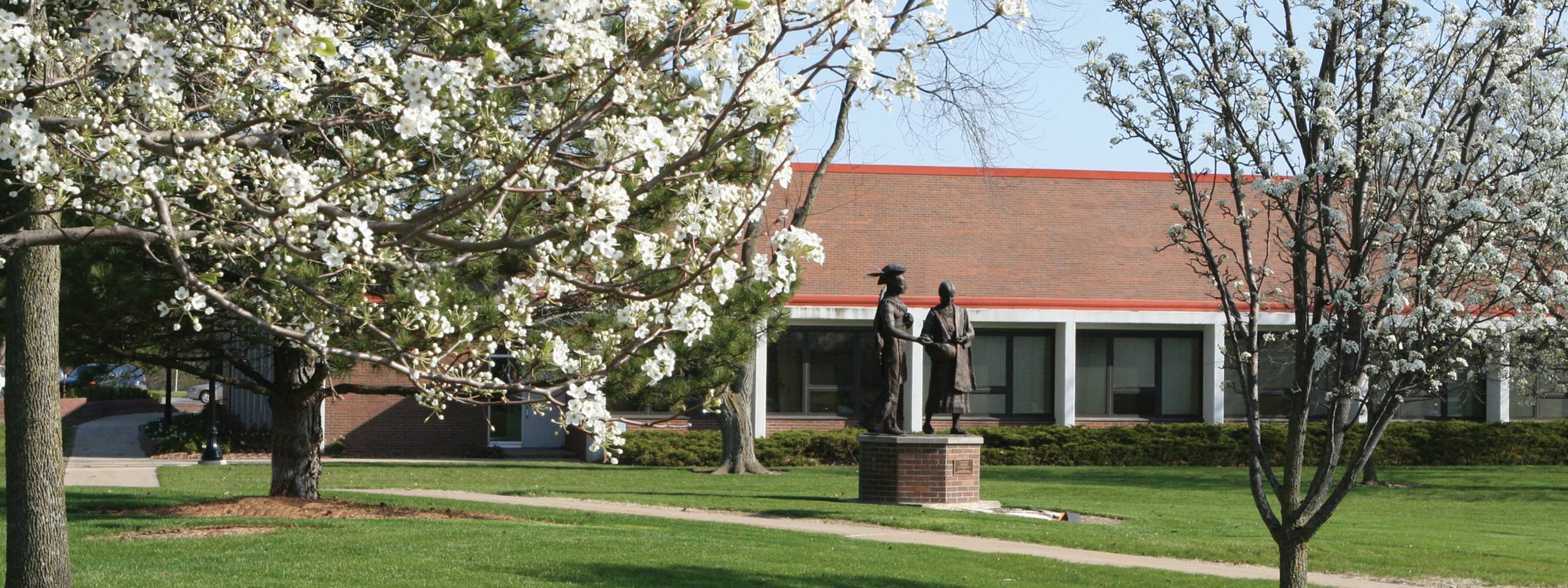
When the Rural Health Education Center was built on the Indian Hills Community College Ottumwa campus in 2006-07, extra space was included that planners hoped would one day house new dental programs at the college. That vision came true a half-dozen years later when a $750,000 dental clinic was opened for simulation lab and clinical experience.
Indian Hills first offered a Dental Assisting program in 2013 and, one year later, the Dental Hygiene program accepted its first students.
Dental professionals throughout IHCC’s ten-county area for years had advocated for the addition of these programs to help them address the shortage of skilled workers in their facilities.
Carol Sexton-White, Program Director and Instructor for Dental Assisting, said the response to the program has been what they imagined it could be. “Since the first cohort in 2013, we have had a full program every year,” Sexton-White said. “Our completion rate hovers around 85 percent and nearly 68 percent of our graduates continue on to the Dental Hygiene program with 40 percent taking jobs in private dental practices, clinics and federal agencies.”
Students who complete the Dental Assisting program have the option of going into the workforce or moving into the Dental Hygiene program, a progression the instructors say can be a natural transition.
The facility in the RHEC has state-of-the-art dental equipment and features digital radiography, digital record software and 10 operatories for student instruction and patient care. The patients come from both on-campus and the surrounding area.
Sexton-White says although there are no prerequisites for admission to her program, courses that prospective students should take include Medical Terminology, Human Anatomy and Lab, Computer Essentials and Interpersonal Communications.
“The clinical portion of the program begins in the spring term (which starts Feb. 19, 2020 in this academic year),” Sexton-White explained. “Students are assigned to a private dental practice for 12 weeks. They attend eight hours each day, two days a week. In the summer term they will be assigned to another site for 12 more weeks. Students apply what they have learned in the program in this real-world experience.”
For those students who go from the Dental Assisting program to Dental Hygiene, they are glad to know that several courses from the former are already accepted, reducing the number of credit hours needed in the first year of Dental Hygiene, which takes two years to complete.
Just as in Dental Assisting, general education courses can be completed prior to entering the Dental Hygiene program. Some students have finished the first program and are able to work as a dental assistant during the first year of Dental Hygiene.
In the Dental Hygiene program, with Jody Williams as the program director, students learn to take and develop dental x-rays, clean patients’ teeth, do non-surgical periodontal therapy, and learn how to apply fluoride, sealants and other anti-cavity treatments.
Dental Assisting is one of the fastest-growing professions for young people, according to Sexton-White. She notes wages range from $15-$18 an hour. “It is a rewarding career for anyone looking for a quick return on a relatively short education in health care,” she said. Wages for a dental hygienist can start at nearly twice that amount.
There are both on-line and in-person courses in both of the IHCC dental programs. Anyone who would like more information on Dental Assisting or Dental Hygiene can contact either of the program directors at Indian Hills.
(This is a monthly column, provided by Indian Hills Community College)